
Come to think of it, would players truly perform at their best on a poorly maintained court? If you manage a sports facility in Asia, court maintenance services should be at the top of your priority list.
Why? With tropical climates bringing intense humidity, heat, dust, and frequent rainfall, court surfaces can deteriorate up to 2x faster without proper upkeep. Furthermore, skipping regular maintenance can drive renovation expenses up by 30–50%, turning minor issues into major capital outlays. Want to avoid that? Keep reading.
Table of Contents
What Are Court Maintenance Services
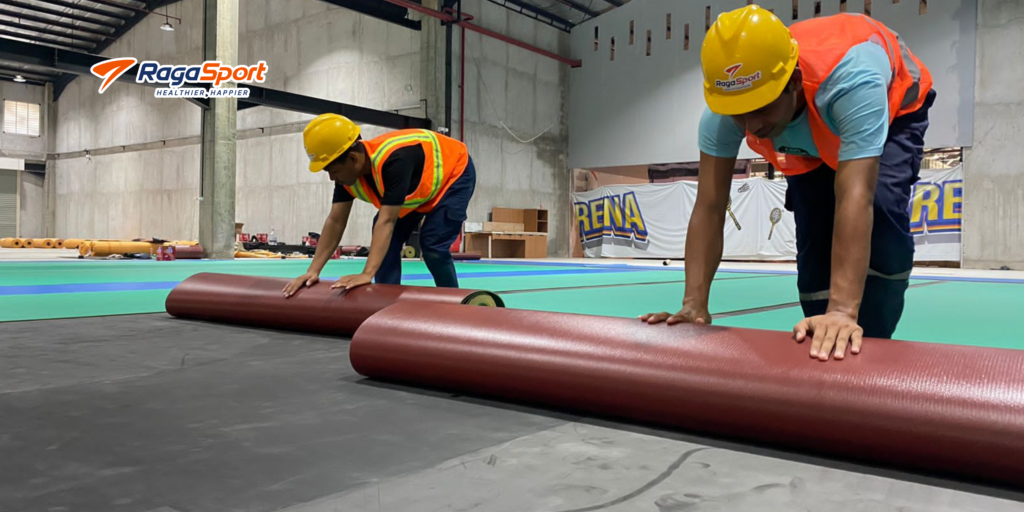
Whether you manage volleyball, tennis, badminton, padel, or other sports courts, maintenance services are essential to keep your facility performing at its best. These providers usually cover a range of maintenance tasks such as:
- Court cleaning (removal of dust, dirt, surface contaminance, mold, algae, and shoe marks)
- Surface leveling and court adjustments
- Brushing & Grooming
- Net replacement and tightening
- Lighting system repair and maintenance
- Crack repair
- Fence and enclosure repairs
- Line repainting or remarking
- Tile or surface panel replacement
- Lubrication of moving or mechanical components
Even though modern court surfaces are designed for durability and long-term use, constant play, weather exposure, and environmental buildup will gradually cause wear and tear if not properly maintained. That’s why providers typically handle both indoor and outdoor courts, supported by routine care and regular inspection.
Why Court Maintenance Matters More in Tropical Asia
In tropical Asia, maintaining sports courts it’s a strategic necessity, not just a routine. Because, unlike standard flooring, each surface (whether PU, acrylic, wood, vinyl, or concrete) responds differently to heat, humidity, and heavy rainfall.
Professional maintenance helps you:
- Preserve surface texture and grip for consistent gameplay
- Prevent moss, algae, and water-related damage
- Remove embedded dirt, dust, and sweat buildup
- Minimize moisture damage and surface discoloration
- Maintain clear line markings and court visibility
- Reduce long-term repair and resurfacing costs
- Enhance player safety by lowering slip risks
- Present a clean, professional facility for users and events
- Avoid unnecessary downtime due to preventable damage
In tropical climates, court maintenance is a strategic necessity, not just a routine. Intense heat, high humidity, and heavy rainfall affect every surface differently, whether it’s PU, acrylic, vinyl, or wood. Without professional care, these elements don’t just wear down your court; they compromise its safety and performance.
Proactive maintenance protects your investment by:
- Preventing Biological Hazards: Stopping moss, algae, and slippery patches before they cause accidents.
- Preserving Surface Integrity: Protecting texture and grip against UV discoloration and moisture-induced bubbling.
- Optimizing Playability: Ensuring clear line markings and consistent ball bounce for a professional experience.
- Cutting Long-term Costs: Fixing minor surface wear now to avoid expensive total resurfacing later.
Don’t wait for visible damage to take action. A well-maintained court isn’t just an asset, it’s a commitment to player safety and peak performance.
Types of Court Maintenance Services
Maintaining a sports court in tropical Asia requires a combination of specialized services to keep surfaces safe, playable, and visually appealing. Here’s a breakdown of the main types of maintenance you should consider for both indoor and outdoor facilities:
1. Court Cleaning
Regular court cleaning is the foundation of proper upkeep. For indoor courts, cleaning should ideally occur 2–3 times per week, while outdoor courts may need daily attention during peak usage or rainy seasons. Cleaning typically involves:
- Sweeping or vacuuming dust and debris
- Removing sweat residue and shoe marks
- Washing the surface to prevent mold, algae, or moss growth
- Drying to prevent moisture damage
Without consistent cleaning, dust buildup and moisture can accelerate surface wear and increase slip risk, directly impacting player safety and court longevity.
2. Regular Inspections
This kind of court maintenance would help you detect small issues before they become costly repairs. Professionals recommend at least monthly inspections for indoor courts and bi-weekly checks for outdoor courts in humid regions. A thorough inspection checklist usually includes:
- Surface cracks, chips, or discoloration
- Line marking visibility and wear
- Net, post, and fence condition
- Lighting functionality
- Drainage and water pooling issues
- Loose tiles or panels
- Signs of algae, mold, or moss
Proactive inspections enable early issue detection, helping maintain court performance while minimizing unexpected downtime and repair costs.
3. Surface Repair and Resurfacing
Even with regular cleaning and inspections, surfaces will eventually require repair or resurfacing. Several indicators that action is needed include:
- Cracks, chips, or peeling layers
- Uneven traction or grip loss
- Faded or worn line markings
- Water pooling or drainage issues
Resurfacing is generally recommended every 5–8 years for indoor courts and every 3–5 years for outdoor courts in tropical climates, depending on usage and environmental exposure.
Timely repair is an important part of professional court maintenance services you can take advantage of. It would help you maintain player safety, while extending the lifespan of your facility and protect your investment over the long term.
Read more: How to Extend the Lifespan of Your Sports Court
4. Turf Maintenance
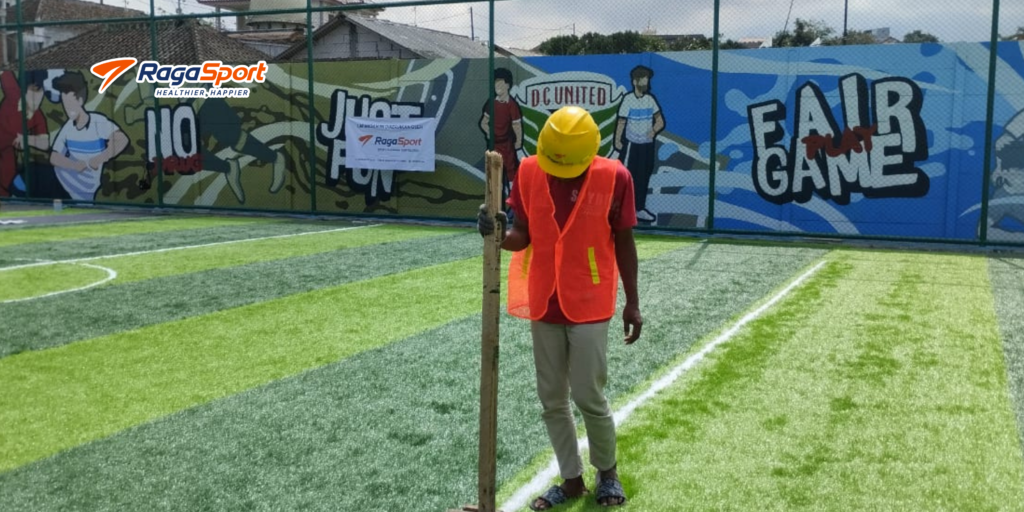
For artificial turf or hybrid courts, proper maintenance is essential to ensure consistent performance, player safety, and long-term durability. To keep the turf in top condition, professionals follow several key practices, including:
- Brushing fibers regularly to prevent matting and keep the surface lively
- Maintaining infill levels according to manufacturer standards (typically 10–15 mm below fiber tips)
- Leveling the surface to prevent uneven play areas and water pooling
- Removing debris, moss, or weeds that can damage fibers or create slippery spots
- Checking seams and edges for wear or separation
Consistent and standards-based maintenance can extend turf lifespan by up to 50% while preserving performance and safety.
Why Work with a Professional Contractor Like RagaSport
Managing a sports facility in tropical Asia comes with ongoing challenges. From rapid surface deterioration, inconsistent maintenance quality, and unexpected repair costs. Without the right expertise, small issues like poor drainage or surface cracks can quickly escalate into expensive renovations.
Therefore, you need a professional contractor handling diverse court types and tropical conditions. RagaSport delivers reliable court maintenance services that focus on long-term efficiency. Instead of reactive fixes, you get structured maintenance plans and precise inspections.
Get Expert Court Maintenance Services in Asia
The point is investing in professional court maintenance services isn’t just about keeping your court clean but also about protecting your asset and maximizing returns over time. With the right partner, you can significantly lower repair expenses, maintain high user satisfaction, and ensure your facility remains competitive.
Ready to optimize your court performance while saving costs in the long run? Consult with RagaSport today and discover a smarter, more efficient maintenance strategy tailored to your facility.
Backed by internationally certified materials and a professional team, RagaSport ensures reliable results. You also get project warranties and flexible payment options. That’s why more than 1.100+ clients trust their field construction and maintenance services.