
Because it’s classified as a new trend, padel court cost one of the first things investors and sports entrepreneurs evaluate as this fast-growing sport gains momentum. According to the International Padel Federation (FIP), padel is now played in over 90 countries, with Asia emerging as one of the fastest-growing regions in recent years.
Markets like Japan, the UAE, and Southeast Asia are seeing a steady rise in both players and facilities. This sport, often described as a blend of tennis and squash, is easy to learn and highly engaging for all age groups. As interest continues to grow, so does the business opportunity. The question is, how much does it actually cost to build a padel court today? Let’s dive in and break it down.
Table of Contents
Padel Court Cost: Budget Breakdown
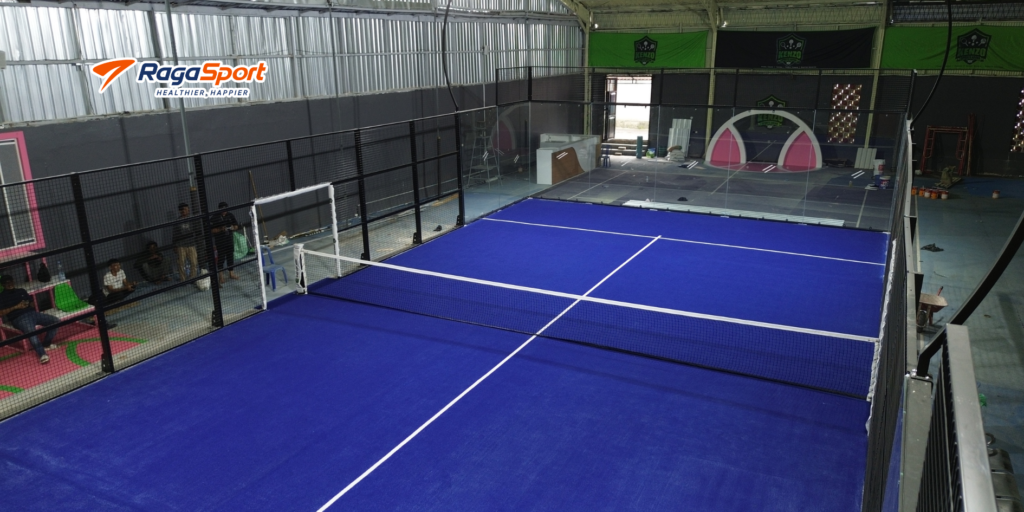
Building a padel court requires specialized equipment and more precise technical specifications compared to tennis or badminton courts. The overall construction cost can vary depending on materials, design, and whether the court is indoor or outdoor. Below is a realistic cost ranges to help you budget effectively:
1. Base Construction Cost
The base structure is the core investment and represents the largest portion of the total padel court cost. For a standard court (20m x 10m), the construction typically ranges from US$56.250,00 to US$87.500,00. This includes:
- Reinforced concrete foundation for long-term stability
- Synthetic turf surface specifically designed for padel gameplay
- Tempered glass walls for rebound play dynamics
- Steel or aluminum structural framing for durability
- Essential accessories such as nets, doors, and boundary components
This stage is critical because it determines the overall durability and safety of the facility. A strong foundation reduces long-term maintenance risks and ensures consistent play quality.
Read more: Best Flooring for Padel Courts: Turf Specs, Costs, and What Most Contractors Won’t Tell You
2. Lighting System
Lighting is essential if the court operates beyond daylight hours. The estimated cost ranges approximately US$3.125,00 to US$7.500,00.
Many operators choose LED systems due to their energy efficiency and longer lifespan. While the upfront investment may be higher, operational savings make them a practical choice. Lighting quality can also influence the overall padel court price, especially for premium or tournament-grade facilities.
3. Roof and Weather Protection (Optional)
If you want to maximize court usage, adding a roof or weather protection system is a smart move. This is especially relevant in regions with unpredictable weather. The additional padel court cost for this feature ranges from US$12.500,00 to US$31.250,00.
Although it increases initial investment, a covered court allows year-round operation, minimizes weather disruptions, and improves booking consistency—ultimately supporting stronger revenue performance.
4. Additional Costs
Beyond core construction, several supporting elements should also be considered:
- Drainage and ventilation systems: US$1.875,00 – US$4.375,00
- Supporting facilities (toilets, waiting areas, café): US$6.250,00 – US$18.750,00
- CCTV and security systems: US$1.250,00 – US$3.125,00
- Branding and initial marketing: US$938,00 – US$2.500,00
These components may not define the structure itself, but they significantly impact user experience and business performance.
Factors That Influence Padel Court Construction Costs
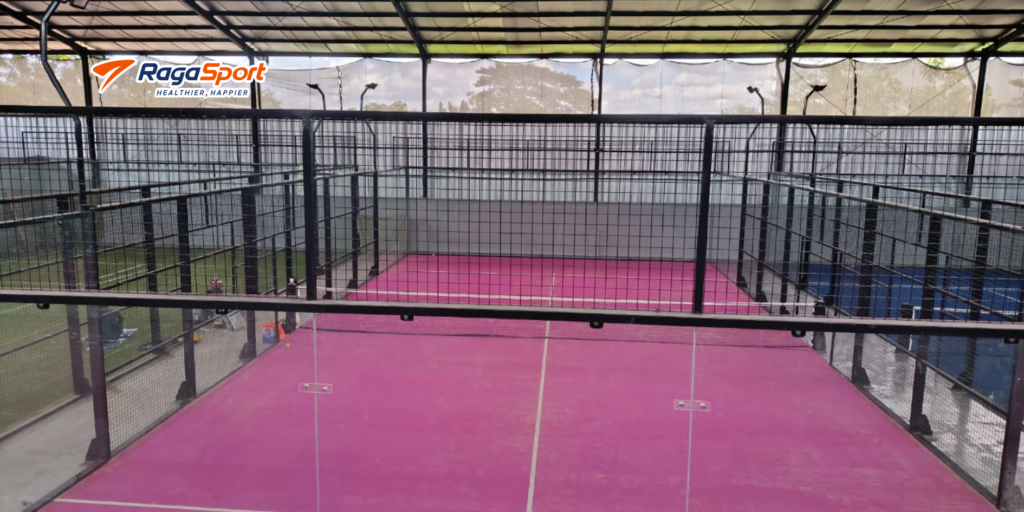
Even with the same basic court dimensions, the final padel court cost can shift significantly depending on:
- Location and land value: Building in high-demand urban areas or commercial hubs usually comes with a higher land price tag.
- Indoor vs outdoor configuration: Outdoor courts are generally more cost-efficient to build, but they are exposed to weather interruptions. Indoor facilities, while requiring additional structural work and ventilation systems, offer year-round usability.
- Standards and intended use: A casual recreational court is far less demanding than a competition-ready venue. If the goal is to host official matches or tournaments, stricter specifications for glass quality, lighting levels, and structural integrity will naturally push the padel court cost higher.
- Scale of development: Building multiple courts in one project can raise the upfront investment, but it often improves cost efficiency per court.
Ultimately, these factors interact with each other rather than standing alone. A well-planned project balances location, design ambition, and operational goals to control the overall padel court cost without compromising long-term performance.
Monthly Operating Costs and Profit Simulation
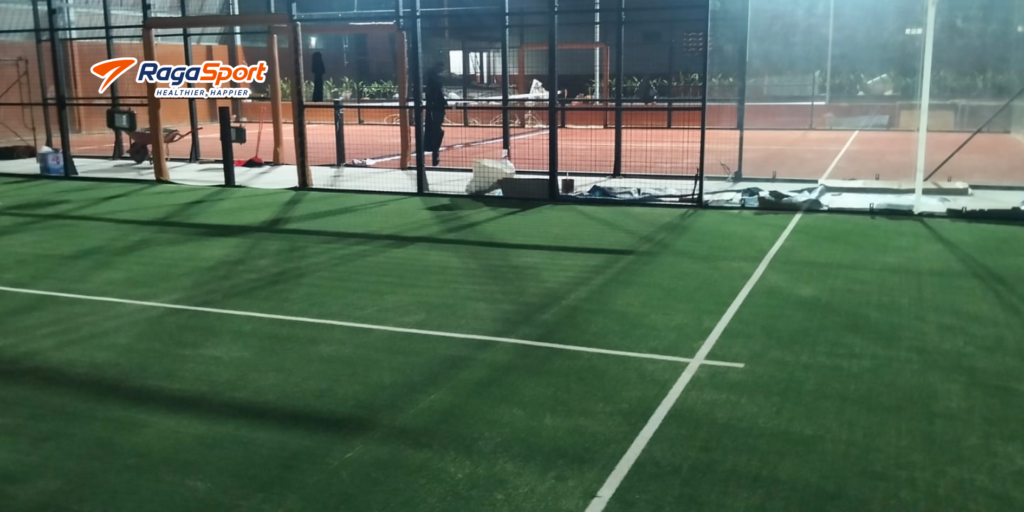
Once the facility is operational, managing expenses becomes crucial to ensure steady returns and faster recovery of your padel court cost. A well-structured cost plan helps maintain profitability over time.
Estimated Monthly Operating Costs
Here’s a typical breakdown of recurring expenses:
- Staff salaries (admin, cleaning staff, coaches): US$937.50,00–US$1.562,00
- Electricity and maintenance (flooring, LED lighting): US$625,00–US$1.250,00
- Marketing and events: US$312,00–US$625,00
So, total monthly operating cost: US$1.875,00–US$3.125,00. These operational expenses will directly influence how quickly your padel court cost can be recovered.
Revenue and Profit Simulation
Most revenue comes from hourly court rentals:
- Average rental rate: IDR 400,000/hour (US$25.00)
- Operating time: 12 hours/day with 50% occupancy (6 booked hours)
Monthly revenue:
IDR 400,000 × 6 × 30 = IDR 72 million (US$4,500.00)
Profit Estimation
- Estimated monthly net profit: ~IDR 32 million (US$2.000.00)
- Estimated annual profit: ~IDR 384 million (US$24,000.00)
If occupancy improves to 70–80% and additional income streams like memberships, coaching programs, and tournaments are added, annual profit can exceed US$62.500,00.
Tips to Optimize Your Padel Court Budget
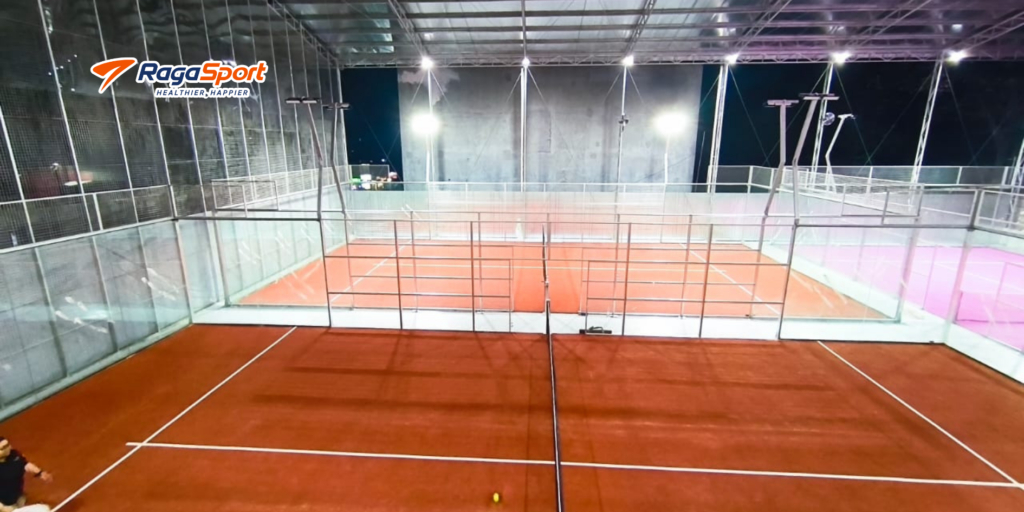
Although building a padel court requires a significant investment, there are practical ways to manage your padel court cost more efficiently while still delivering a high-performance facility:
1. Build in Phases
Instead of going all-in from day one, start lean, especially if you have a large plot of land. Launching with a single court allows you to validate demand, understand user behavior, and stabilize cash flow. Once bookings become consistent, expansion becomes a calculated move rather than a risky bet. This approach also helps you avoid idle assets that don’t generate immediate returns.
2. Use High-Quality Local Materials
Not every component needs to be imported. Sourcing reliable local materials can reduce your overall construction cost by up to 15%. The key is to ensure these materials meet performance standards, especially for critical elements like turf and structural framing.
3. Work with an Experienced Specialist Contractor
Choosing the right contractor can make a substantial difference in both cost and outcome. An experienced sports court specialist typically has established supplier networks, efficient workflows, and the technical expertise to avoid costly mistakes. This directly impacts the final padel court price and long-term durability.
For a more reliable solution, you can consider working with Ragasport, a trusted contractor with experience handling over 1.000 sports court projects. We offer professional project management, quality assurance, and warranty-backed construction services. If you’re planning to build a padel court, it’s worth consulting with our team to get tailored recommendations and accurate cost estimates for your project.