
Badminton is widely recognized as one of the most popular sports across Asia, even though it is considered the second most popular participation sport in Asia after soccer. While rackets and shuttlecocks often get the spotlight, the quality of the court, especially the badminton court flooring, plays an equally critical role.
That’s why choosing the appropriate flooring is a high priority. With various options available, understanding each badminton flooring type becomes essential before making a decision. So, how do you know which one truly fits your needs? Let’s dive deeper and explore your options.
Table of Contents
The Importance of High-Quality Badminton Court Flooring
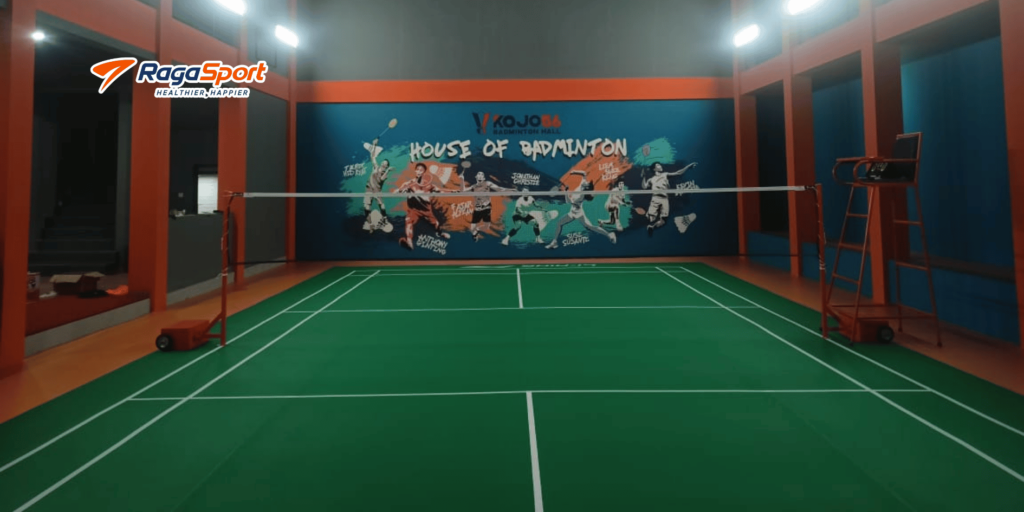
When it comes to performance and safety, investing in high-quality flooring material is non-negotiable. A well-designed surface provides balanced traction, not too slippery, not too rough, allowing you to move swiftly without risking falls.
It also offers proper cushioning, which helps absorb impact and reduces strain on joints like knees and ankles. Beyond safety, good flooring contributes to consistent gameplay. Stable footing supports precise footwork, while a well-finished surface ensures reliable shuttle response.
Read more: How to Build a Durable Badminton Court
6 Types of Badminton Court Flooring
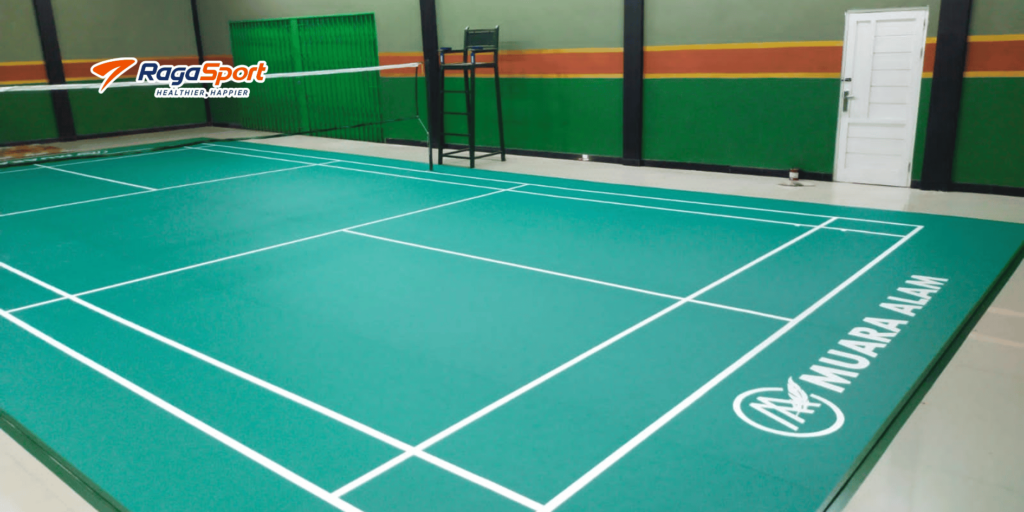
Before making a final decision, it’s important to understand the different options available and how each badminton flooring type can impact performance and maintenance:
1. Vinyl Flooring
Vinyl is widely regarded as one of the most popular choices for modern badminton court flooring, especially for indoor use. This material is specifically engineered for sports environments, featuring a multi-layered structure that delivers excellent elasticity, grip, and player comfort. Its surface is consistent, which helps maintain stable footwork and reduces the risk of slipping during fast-paced rallies.
From a practical standpoint, vinyl is also easy to maintain and comes in various thicknesses and specifications, allowing you to tailor it to your facility’s needs. Whether you are managing a school gym, a community sports hall, or a commercial venue, vinyl offers a balanced combination of performance and efficiency for any indoor court.
2. Flexipave Flooring
Flexipave is a synthetic rubber-based surface designed for high-durability sports facilities. Its standout feature lies in its superior shock absorption, which helps minimize impact on players’ joints during intense matches. This makes it particularly suitable for long playing sessions or high-traffic venues.
The structure of flexipave is both strong and flexible, allowing players to move quickly and confidently without compromising safety. If you’re aiming for long-term usage with minimal wear and tear, this type of badminton court flooring is worth considering.
3. Interlock Flooring (PP Tiles)
Interlock flooring, often made from polypropylene (PP) tiles, is a modular system that snaps together easily. It’s a practical solution for facilities that require flexibility, such as schools, multi-purpose courts, or temporary event setups.
Installation and removal are straightforward, making it ideal for semi-permanent applications. While it may not meet professional competition standards, it remains a functional and cost-effective flooring option for training sessions and recreational play.
4. Wooden Flooring
Wooden flooring has long been a trusted option in sports facilities, offering better durability and comfort compared to harder surfaces like cement. It provides natural shock absorption and vibration damping, which helps reduce fatigue and supports smoother movement during play.
This type of flooring is often used in professional arenas due to its performance quality and classic feel. However, it requires proper climate control to maintain its condition. Without stable temperature and humidity levels, wooden surfaces can warp, expand, or suffer long-term damage.
5. Acrylic Flooring
Acrylic flooring is more commonly used for outdoor courts due to its resistance to weather conditions and UV exposure. It maintains color vibrancy over time and requires relatively low maintenance. However, it is less suitable for an indoor court setting where cushioning and shock absorption are more critical.
6. Rubber Flooring
This kind of badminton court flooring is well-known for its slip-resistant properties, ensuring players maintain stable footing even during fast and intense rallies. It also provides excellent shock absorption, making it a comfortable choice for players who are prone to joint stress or injuries.
Often available in the form of rubber mats, this flooring type is versatile and easy to install. While it may not always be used for professional-level courts, it is highly effective for training areas and recreational facilities.
Critical Things to Check Before the Installation Process
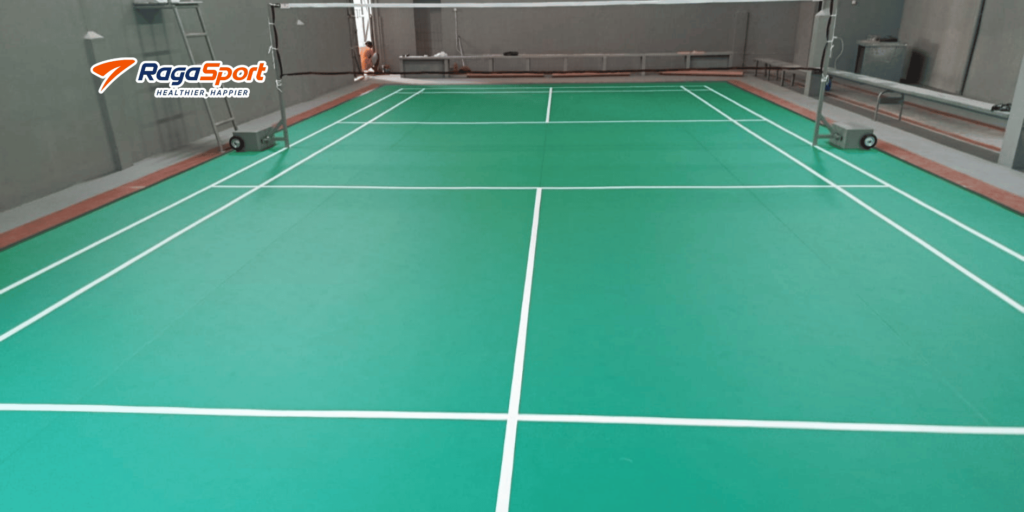
Every great court starts with smart planning, also a few key checks can make or break the final result, such as:
1. Purpose of the Court
First, you need to define the primary use of your facility. Is it for professional matches, training sessions, or casual recreation? This decision directly influences your choice of badminton court flooring and overall design.
2. Performance and Player Safety
In badminton, movement is quick, explosive, and often unpredictable. That’s why your indoor court flooring needs to do more than just “look good.” It should provide reliable traction to prevent slipping during sudden stops or pivots, while also offering enough cushioning to handle repeated impact.
3. Durability and Material Quality
Durability is a long-term investment factor that should never be ignored. Flooring that wears out quickly due to heavy use will only increase maintenance costs over time. Look for materials resistant to scratches, dents, and moisture.
Even options like rubber mats can be useful in certain training zones where flexibility and resilience are needed. Choosing durable badminton court flooring ensures your facility remains in top condition for years.
4. Budget Considerations
Cost is always a deciding factor. While premium surfaces offer superior performance, there are also mid-range options that balance quality and affordability. The key is not just to go for the cheapest option, but the one that offers the best value over time.
5. Maintenance Requirements
Also, consider how much upkeep the surface requires. Some materials need regular cleaning and inspection, while others are relatively low-maintenance. A well-chosen badminton court flooring system should match your operational capacity, not just your budget.
Have You Chosen the Right Badminton Court Flooring for Peak Performance?
Proper planning is the foundation of a safe, comfortable, and sustainable sports facility. By understanding different materials and aligning them with your specific needs, you can maximize the long-term performance of your badminton court flooring while ensuring an optimal playing experience.
If you’re still weighing your options, you don’t have to figure it out alone. Ragasport.com is ready to be your discussion partner, guiding you through every stage of development with a professional approach and strong technical standards.
Ready to take the next step? Consult your court requirements with Ragasport team today, so every decision you make is precise, efficient, and built to meet the highest standards.