
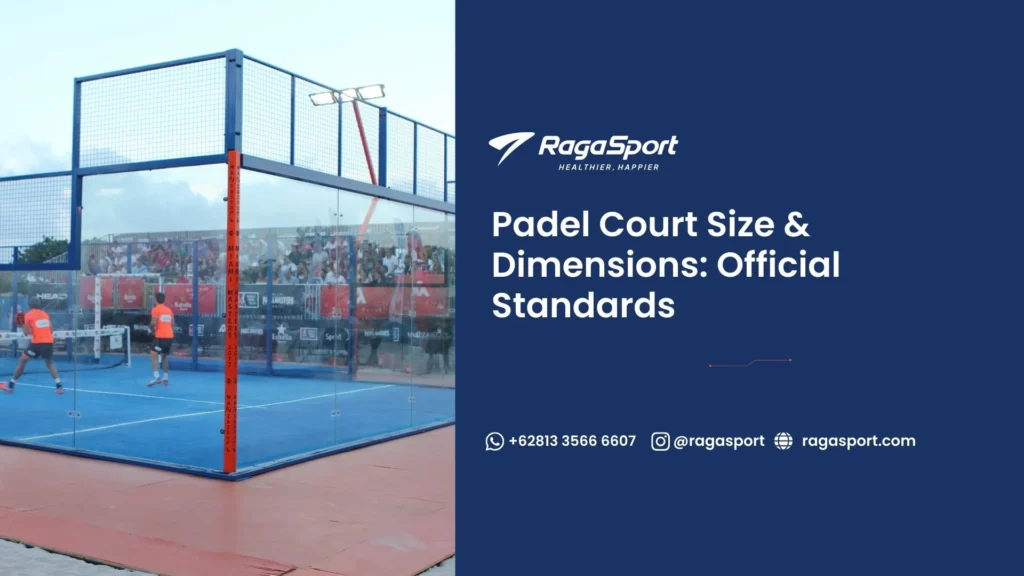
Padel is growing fast around the world, but when people ask “What is the actual size of a padel court?”, the answers online are often fragmented, oversimplified, or missing critical details. Understanding padel court size and dimensions is not just about knowing the famous 20 × 10 meters figure it’s about grasping how the court is structured, how space is truly calculated, and why these measurements matter for play quality, safety, and long-term facility planning.
Whether you’re a club owner, developer, architect, or simply exploring padel from a technical standpoint, getting the dimensions right is the foundation of a proper court. In this guide, we break down the official padel court dimensions, explain the layout in a clear and practical way, and highlight the real space requirements that are often overlooked so you don’t just know the numbers, but actually understand how a padel court is meant to work in the real world.
Official Padel Court Size (Global Standard)
At the core of every professional and commercial padel facility lies one non-negotiable standard: the official padel court size is 20 meters long and 10 meters wide. This measurement defines the actual playing area and is taken from the inside of the surrounding walls, not from the outer structure. If you’ve ever seen different numbers floating around online, this is usually where the confusion starts.
This 20 × 10 meter format is the global reference used by the International Padel Federation and adopted worldwide for tournaments, club courts, and certified installations. In other words, if a court doesn’t follow these dimensions, it may still be playable but it won’t be considered regulation-standard.
What makes padel unique is that these dimensions are designed specifically for four players, balanced rallies, and wall-based gameplay. The width allows for fast exchanges without overcrowding, while the 20-meter length creates enough depth for lobs, smashes, and tactical positioning. This is why padel feels dynamic and accessible at the same time the court size is intentional, not arbitrary.
If you’re planning to build or invest in a padel court, this standard matters more than aesthetics or branding. Getting the official size right from the start ensures fair play, compatibility with competitions, and long-term usability especially as padel continues to professionalize globally. Before thinking about glass types, turf, or lighting, this is the number you should lock in first.
Court Layout & Net Dimensions
After understanding the official 20 × 10 meter court size, the next thing that really defines how padel is played is how that space is structured. The court layout and net dimensions are designed to create balanced rallies, fair serving conditions, and consistent gameplay on both sides.
1. Court division and playing halves
The padel court is split by a net positioned exactly at the center, creating two identical halves of 10 × 10 meters. This symmetry ensures that neither side has a spatial advantage and that every rally starts on equal terms.
2. Net length and height regulations
The net runs across the full width of the court with a total length of 10 meters. Its height is carefully regulated:
- 0.88 meters at the center
- 0.92 meters at the net posts
This slight height difference may seem minimal, but it plays a key role in controlling ball trajectory and preventing overly dominant flat shots.
3. Service line and service boxes
The service line is located 6.95 meters from the net, forming the service boxes on each side of the court. These boxes are further divided by a center service line, guiding legal serves and reinforcing padel’s tactical, placement-focused style rather than pure power.
All of these measurements follow the standards defined by the International Padel Federation and work together as one system. When the layout and net dimensions are executed correctly, the game feels natural, fair, and fast-paced—exactly how padel is meant to be played.
Minimum Space Required (Indoor & Real Footprint)
Knowing the official 20 × 10 meter court size is essential—but when it comes to indoor padel, the real question is often bigger: how much total space do you actually need to build it properly? This is where many projects go wrong, not because the court is wrong, but because the surrounding space is underestimated.
1. Minimum ceiling height (clear vertical space)
For indoor padel courts, the minimum clear height is 6 meters, measured from the playing surface to the lowest obstruction. This space must be completely free—no lights, beams, or ventilation systems hanging into the playing zone.
For new or premium facilities, many operators plan around 8 meters to improve lobs, smashes, lighting placement, and overall playing comfort. The difference is immediately noticeable once the game speeds up.
2. Playing area vs total footprint
This is the critical distinction. The 20 × 10 meters only covers the playable area inside the walls. In real-world construction, you also need space for:
- Structural framing and glass systems
- Safe access around the court
- Maintenance and emergency clearance
Because of this, most indoor projects plan a realistic footprint of approximately 25 × 15 meters per court. This allows the court to function properly—not just exist on paper.
3. Why this space planning matters
Adequate footprint and height don’t just affect comfort; they affect play quality, safety, and long-term usability. Courts built too tight may technically meet minimum rules, but they often feel cramped, limit shot variety, and create operational issues later. From a business perspective, correcting these mistakes after construction is far more expensive than planning the right dimensions from day one.
If you’re designing an indoor padel facility, think beyond the court lines. When the vertical clearance and total footprint are right, the court feels open, natural, and future-proof—exactly what players expect from a modern padel venue.
Understanding padel court size and dimensions goes far beyond memorizing the 20 × 10 meter standard. A great padel court is the result of correct layout, precise net measurements, proper wall heights, and realistic space planning, especially for indoor facilities. When all these elements work together, the court feels balanced, safe, and enjoyable—whether it’s used for casual play, club activities, or professional competition. Cutting corners on dimensions might save space on paper, but in practice it often compromises play quality and long-term usability.
If you’re planning to build or invest in a padel court, treat dimensions as the foundation of the entire project. Getting them right from the beginning ensures your court meets international standards, feels right for players, and remains relevant as padel continues to grow globally.
If you’re considering building a padel court or want expert guidance on layout, space planning, and international standards, RagaSport can help you plan it properly—from concept to execution. Get in touch with our team to discuss your project and make sure your padel court is built the right way, not just the easy way.