
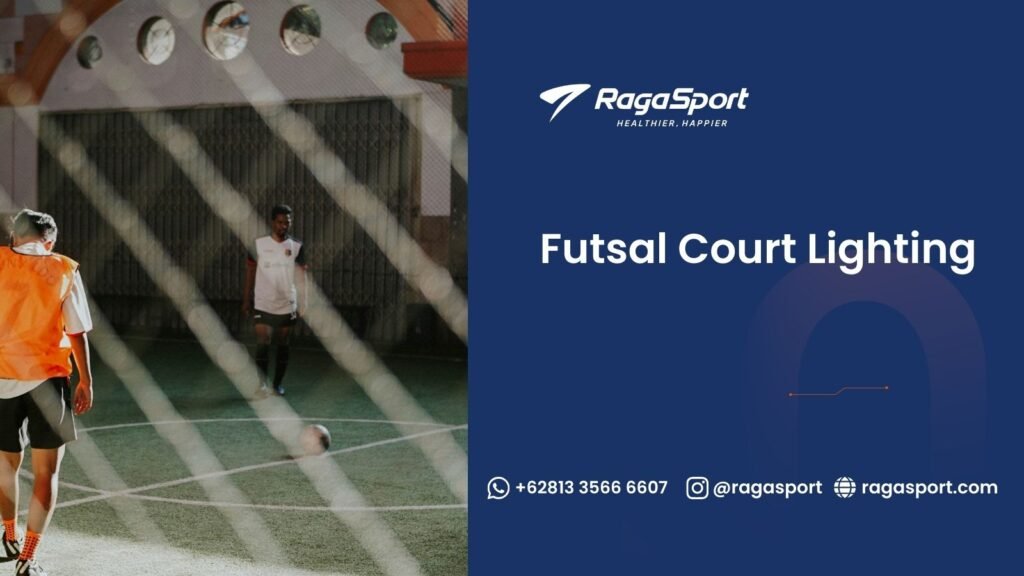
Futsal court lighting is one of those details everyone feels, but few people plan properly. When the lighting is right, the game feels fast, sharp, and comfortable—players track the ball effortlessly, goalkeepers react confidently, and the court looks professional. When it’s wrong, even a brand-new futsal court can feel tiring, unsafe, and frustrating to play on. The problem? Many projects still think lighting is just about “how many lux” or “how many lamps,” when in reality, performance comes from a combination of illuminance, uniformity, glare control, and smart fixture placement. In this guide, we’ll break down what truly matters in futsal court lighting—based on international standards, real-world court design principles, and modern LED technology—so you can design, evaluate, or upgrade a futsal court that doesn’t just look bright, but actually plays better. As you read, ask yourself: does my court help players perform at their best, or does the lighting quietly work against them?
Lighting targets that matter (not just “bright”)
If there’s one mindset that quietly ruins futsal court lighting projects, it’s this: “As long as it’s bright enough, it’s fine.” In reality, players don’t experience lighting as a lux number—they experience it as clarity, comfort, and confidence. That’s why professional futsal lighting is defined by a set of performance targets, not a single brightness figure.
Here are the lighting targets that actually matter—and why each one directly affects how the game feels on court.
Average illuminance the baseline, not the finish line
Illuminance tells you how much light reaches the playing surface. It’s important, but it’s only the starting point. Too low and players struggle to see the ball; too high and you waste energy without improving play. The key is choosing a target level that matches how the court is used—training, competition, or recorded matches—rather than blindly overshooting “to be safe.”
Uniformity so the game feels consistent everywhere
Uniformity measures how evenly light is distributed across the court. This is where many courts fail. Poor uniformity creates bright spots and dark patches, forcing players’ eyes to constantly adapt. In a fast sport like futsal, that split-second adjustment matters. Good uniformity means a pass feels just as readable near the sideline as it does in front of goal.
Glare control the difference between playable and frustrating
Glare is not about brightness; it’s about where the light comes from. Poorly positioned fixtures can shine directly into players’ or goalkeepers’ eyes, especially during high balls or quick transitions. Proper glare control comes from smart mounting heights, beam angles, and aiming—not from dimming the system and sacrificing visibility.
Color quality clarity, depth, and visual comfort
Modern LED lighting gives us control over color temperature and color rendering. When done right, players see clearer contrast between the ball, lines, floor, and opponents. When done wrong, the court can feel flat, harsh, or visually tiring. Color quality also matters if the venue is used for content, live streaming, or promotional footage.
What makes these targets powerful is that they work together. High lux without uniformity still feels bad. Perfect uniformity with bad glare placement still frustrates goalkeepers. A well-designed futsal court lighting system balances all four so players stop noticing the lights—and start focusing entirely on the game.
Quick check for you:
If someone asked you why your futsal court lighting feels good (or bad), could you explain it using these four targets? If not, that’s usually a sign the lighting was installed—but never truly designed.
In the next section, we’ll connect these targets to clear lighting standards and recommended levels, so you know exactly what to aim for—and how to justify it when planning, upgrading, or tendering a futsal court project.
Standards & recommended lux levels for futsal
Once we agree that futsal lighting is more than just “bright,” the next logical question is: how bright is actually enough? This is where standards matter—not to complicate things, but to give everyone a shared, objective reference. For futsal courts, the most widely used international benchmark is EN 12193, which defines lighting requirements based on how the court is used, not personal preference.
Instead of one fixed number, the standard works with lighting classes. Think of these as performance tiers.
Recreational & training futsal courts
This level is designed for community use, schools, and daily training. The goal is comfort, safety, and clear visibility without unnecessary energy use. At this level, lighting should feel consistent across the court, with no distracting dark corners or harsh glare—even during fast ball movement.
Competitive futsal courts
Once matches become more serious, lighting expectations rise. Players move faster, passes are sharper, and visual demands increase. Here, higher illuminance is paired with stricter uniformity requirements so the game feels equally readable everywhere—especially around the goal area where visual pressure is highest.
Professional & broadcast-ready courts
If the court is used for recorded matches, streaming, or promotional content, lighting needs to do more than support players—it must support cameras. This means higher light levels, better vertical illumination, and tighter control over glare and flicker so footage looks clean, natural, and professional.
What’s important to understand is why standards separate these levels. A recreational court doesn’t automatically become “better” just because it uses competition-level lux. Over-lighting increases costs, energy use, and sometimes glare—without improving how the game is played. The smartest projects start by asking one question:
How will this futsal court actually be used, day to day?
From there, the standard helps you justify the right lighting target—to owners, contractors, and even future operators. It also makes performance measurable. Instead of debating whether a court “feels bright enough,” you can check whether it meets the chosen class using on-site measurements.
Quick reality check for you:
If you walked onto your futsal court tonight, would you confidently say which lighting class it was designed for—and why? If not, chances are the lighting target was never clearly defined.
In the next section, we’ll go deeper into uniformity and glare, because hitting the right lux number means very little if players are still squinting or struggling to read the game.
Uniformity & glare: the two reasons players complain
If you ever hear players say “the court feels weird” or “my eyes get tired fast,” the problem is almost never the lux number. It’s usually poor uniformity or uncontrolled glare—or a combination of both. These two factors are the most common reasons futsal players complain about lighting, even on courts that look bright at first glance.
Uniformity: why patchy light breaks the flow of the game
Uniformity describes how evenly light is spread across the entire playing area. When uniformity is poor, the court ends up with bright zones and darker patches. Players’ eyes are forced to constantly adapt as the ball moves from one area to another. In a fast, low-bounce game like futsal, that constant visual adjustment slows reactions, affects passing accuracy, and increases fatigue—especially during longer sessions.
Good uniformity creates a subtle but powerful effect: the game feels smooth. The ball is easy to track anywhere on the court, lines are consistently visible, and players stop thinking about the lighting altogether. This is why experienced players often prefer a well-balanced court over one that’s simply “very bright.”
Glare: when light works against the players
Glare happens when luminaires are positioned in a way that sends intense light directly into players’ eyes. Goalkeepers feel this first—especially during high balls or quick transitions—but outfield players experience it too when looking up for passes or shots. The tricky part? Glare can exist even when lux levels are technically correct.
The cause is almost always placement and aiming, not brightness. Fixtures mounted too low, aimed too aggressively, or placed directly in common sightlines create visual discomfort and momentary blindness. Reducing glare doesn’t mean dimming the system; it means controlling where the light goes—and just as importantly, where it doesn’t.
Why uniformity and glare must be solved together
Here’s the catch: fixing one without the other doesn’t work. You can improve uniformity by adding more fixtures—but if they’re badly aimed, glare gets worse. You can reduce glare by lowering output—but then uniformity and visibility suffer. High-performing futsal lighting finds the balance through optical control, smart layout, and precise aiming, not guesswork.
A simple self-check you can try:
Stand at the goal line and follow an imaginary high ball across the court. Do your eyes feel relaxed, or do you instinctively squint or look away? That reaction tells you more about glare quality than any brochure claim.
When uniformity and glare are handled properly, something interesting happens: players stop complaining, even if they can’t explain why. The court just feels right.
Next, we’ll look at layout and fixture placement, because this is where uniformity and glare are either solved—or accidentally locked in as long-term problems.
Layout & placement that actually works (indoor vs outdoor)
Once you understand lighting targets, uniformity, and glare, everything funnels into one decisive factor: layout and placement. This is where futsal court lighting either becomes a quiet performance booster—or a permanent source of complaints. The truth is simple but often ignored: where you put the lights matters more than how powerful they are.
Indoor futsal courts: control the sightlines, not just the ceiling
Indoor courts usually rely on high-bay or linear LED fixtures mounted on the ceiling structure. The biggest mistake here is placing lights directly above key play zones—especially the center and goal areas—without thinking about player sightlines.
What actually works:
- Fixtures are positioned outside the main upward viewing angles, so players don’t look straight into the light when tracking a high ball.
- Light is delivered from multiple directions to support uniformity, not from a single harsh source.
- Mounting height is used strategically: higher mounting allows wider, softer distribution with better glare control—if the optics are right.
A good indoor layout feels calm. Players can look up, pass long, and shoot without instinctively squinting. If the ceiling is low, layout becomes even more critical—optical control and aiming precision matter more than raw output.
Outdoor futsal courts: aiming beats wattage every time
Outdoor courts introduce new variables—poles, weather exposure, and wider surroundings—but the core principle stays the same: light should enter the court, not attack it.
What works outdoors:
- Poles are placed so luminaires sit outside the court perimeter, keeping glare out of direct play.
- Light is aimed across the court, not steeply down into players’ eyes.
- Goal areas receive balanced coverage from multiple angles, avoiding harsh shadows or blinding hotspots.
A common myth is that adding taller poles or higher wattage automatically improves lighting. In reality, poorly aimed high-power floodlights often make glare worse. Well-designed outdoor layouts rely on optics, aiming angles, and overlap, not brute force.
The hidden rule that applies everywhere
Whether indoor or outdoor, one rule never changes:
Players should rarely be aware of where the lights are.
The moment fixtures become visually dominant, performance drops—even if all the numbers look good on paper.
Here’s a quick mental test:
If you stood at the goal and followed a lofted ball with your eyes, would the light support your vision—or fight it?
If the answer isn’t clear, layout and placement need a rethink.
This is why professional futsal lighting design always connects layout decisions back to uniformity and glare control, not just coverage diagrams. In the next section, we’ll zoom in on LED specifications that actually matter, so you can tell the difference between a fixture that looks impressive on a datasheet and one that truly performs on court.
LED spec checklist (what to demand from a contractor)
By the time you reach the fixture-selection stage, many futsal court projects quietly go off track. Not because the lights are “bad,” but because the conversation turns into wattage, brand names, or discounts—while the specs that actually determine play quality are barely discussed. If you want lighting that performs on court (and not just on paper), this is the checklist you should demand from any contractor.
Think of it as a filter. If a proposal can’t clearly answer these points, it’s not ready yet.
1) Optical control comes first (beam shape beats wattage)
Ask how the light is shaped before asking how powerful it is. Proper optics determine uniformity and glare far more than raw output. A lower-wattage fixture with the right beam distribution will outperform a high-wattage floodlight aimed poorly. Contractors should be able to explain beam angles, symmetry vs asymmetry, and why those choices fit your court layout.
2) Glare management is designed, not promised
“Low glare” claims mean nothing without context. Ask where fixtures are mounted, how they’re aimed, and how player sightlines—especially from the goal area—are protected. If glare control isn’t discussed in terms of placement and optics, it’s usually an afterthought.
3) Flicker performance (especially if cameras are involved)
Modern futsal courts are rarely just for playing anymore. Training clips, social media, live streams—flicker becomes visible fast. Even if players don’t notice it, cameras will. A serious contractor should be ready to explain flicker behavior and driver quality, not just say “it’s LED, so it’s fine.”
4) Color quality that supports visibility, not fatigue
Color temperature and color rendering affect how clearly players see the ball, lines, and each other. Too cold and the court feels harsh; too inconsistent and it feels flat. Ask what color range is being used and why it suits futsal—not just what’s cheapest or “standard.”
5) Durability for the real environment (especially outdoors)
For outdoor courts, specs like ingress protection and surge resistance aren’t technical extras—they’re survival tools. Heat, rain, humidity, and electrical spikes all shorten fixture life if ignored. A good proposal shows you how the system stays stable over years, not just on installation day.
6) Driver quality, thermal design, and warranty clarity
Light output on day one is easy. Maintaining it over time is harder. Ask about thermal management, driver lifespan, and what the warranty actually covers. If the warranty sounds generous but avoids specifics, that’s a red flag.
Here’s a simple gut check you can use:
If the proposal focuses more on how many watts you’re getting than on how the light behaves on court, you’re not looking at a performance-driven design yet.
The best futsal lighting projects don’t chase “the strongest lamp.” They specify fixtures that support uniformity, control glare, stay visually comfortable, and hold performance over time. When contractors know you’re evaluating those factors, the quality of proposals tends to rise immediately.
Next, we’ll look at design verification and on-site testing, because great specs only matter if the finished court can prove it meets them.
Design verification + on-site acceptance testing (how to “prove it”)
A futsal court lighting system doesn’t become good when it’s installed—it becomes good when it’s proven. This is the step many projects skip, and it’s why disputes happen later: players complain, operators feel something’s off, and everyone starts arguing based on opinions. Design verification and on-site acceptance testing exist to remove guesswork and replace it with clear evidence.
Design verification: checking performance before anything is built
Verification starts long before fixtures arrive on site. A proper lighting design is simulated using real photometric data from the selected luminaires, mapped onto the actual court dimensions, mounting heights, and surroundings. The goal here isn’t to make the design look good, but to confirm it can meet the chosen lighting targets—average illuminance, uniformity, and glare control—on paper first.
This step is critical because it answers a simple question early:
If we build this exactly as planned, will it actually perform as promised?
When verification is done properly, design decisions are no longer based on assumptions. Layout, aiming angles, and fixture selection are adjusted before installation—when changes are cheap and easy.
On-site acceptance testing: where theory meets reality
Once the system is installed and aimed, performance must be confirmed on the real court. This is done through on-site measurements, typically using a lux meter and a predefined measurement grid across the playing surface. The grid ensures results represent the entire court, not just the brightest spots.
What matters here isn’t chasing perfect numbers, but checking whether the system meets the agreed class and targets—using the same logic defined by standards such as EN 12193. This turns lighting quality into something objective and defensible.
A proper acceptance test should answer:
- Does the court meet the target average illuminance?
- Is light distributed evenly enough for comfortable play?
- Are there visible glare issues from key positions, especially the goal area?
Documentation: the quiet sign of a professional project
Proof doesn’t stop at measurements. A solid handover includes:
- Measurement results and testing conditions
- As-built layouts and aiming information
- Basic maintenance guidance so performance stays consistent over time
These documents protect everyone—the owner, the operator, and the contractor—because performance expectations are clearly recorded.
Here’s a question worth asking yourself:
If a player complains about lighting six months from now, do you have data to respond—or only opinions?
Design verification and acceptance testing are what separate installed lighting from engineered lighting. They ensure the futsal court performs the way it was promised, not just on opening day, but throughout its working life.
With the lighting proven and documented, the court stops being a question mark—and becomes a reliable asset players trust every time they step onto the pitch.
At the end of the day, futsal court lighting isn’t about chasing big numbers or flashy fixtures. It’s about creating a space where players feel confident, focused, and comfortable every time they step onto the court. When lighting targets are clear, standards are respected, layouts are thoughtfully designed, fixtures are specified properly, and performance is proven on site, something powerful happens: the lighting disappears from players’ minds—and the game takes over.
If there’s one takeaway from this guide, it’s this: good futsal lighting is engineered, not guessed. And the difference shows up immediately in how the court feels, how long players want to stay, and how professionally the venue is perceived.
If you’re planning a new futsal court, upgrading an existing one, or evaluating whether your current lighting is holding the game back, now’s the right time to take a closer look—before small compromises turn into long-term problems.
Want to know whether your futsal court lighting already meets the right standards—or how to fix it if it doesn’t?
Talk to the RagaSport team and let’s evaluate your court based on real performance targets, not assumptions. A short conversation today can save years of complaints tomorrow.